
From relocation to temporary assignments: How global mobility is evolving
Shorter assignments, smooth arrivals: why flexibility is the new cool in employee mobility
Sending an employee abroad for three months sounds straightforward on paper, but in reality, shorter assignments often demand the highest level of care.
As organisations navigate fast-changing European markets, international employee mobility is shifting from traditional multi-year relocations toward shorter, project-oriented placements. Industry outlooks reflect this momentum: a third of mobility professionals expect global mobility activity to increase in 2025, with another half expecting it to remain stable.
However, managing short-term international assignments introduces a fundamental operational challenge: shorter timelines amplify logistical pressures, requiring assignees to land smoothly, establish routines, and deliver business outcomes immediately.
This blog examines how Global Mobility and HR teams are adapting to this shift – exploring the rise of temporary assignments and the critical link between living environments and employee wellbeing.
Along the way, it also highlights how professional Corporate Apartment Management (CAM) providers from dedicated housing partners like Cityus provide the missing foundation: move-in-ready residences and on-the-ground support that safeguard assignee wellbeing, maintain productivity, and maximise assignment ROI.

Global mobility is becoming more flexible
Traditional long-term relocations remain an important part of most mobility programmes, but they now sit alongside a much broader, more adaptable mix of options, including:
- Short-term assignments typically lasting one to nine months
- Project-based deployments and specialised consulting blocks
- Targeted knowledge-transfer trips to train local teams on-site
- Commuter arrangements and cross-border hybrid setups
- Permanent transfers and core expatriate relocations
- International business travel and cross-border remote working.
According to KPMG’s 2025 Global Mobility Benchmarking Survey, 70% of organisations are leveraging short-term assignments, often as a lower-cost alternative to traditional long-term moves, reflecting a shift toward agile, project-oriented deployment.
Furthermore, Mercer’s 2025 Talent Mobility Outlook identified short-term assignments as the fastest-growing mobility model: 34% of organisations anticipate an increase in short-term assignments, compared with just 18% forecasting growth in traditional long-term assignments.
The takeaway for Mobility teams isn’t that one model is replacing another. It’s about giving businesses more options to move the right talent, at the right time, without unnecessary complexity.

Why are short-term assignments growing?
The shift toward temporary assignments is largely a business strategy for commercial growth rather than purely financial. ECA International highlighted this strategic importance in 2025, reporting that 36% of multinational companies strongly agree that international assignments are critical to business growth.
Companies are turning to shorter assignments to:
- Fill temporary technical or leadership skills gaps
- Deploy dedicated specialists on time-sensitive projects
- Open new regional offices and guide local expansion
- Aid international expansion and develop future leaders
- Train local teams and transfer knowledge and skills hands-on
- Respond quickly to market shifts without long lead times.
Short-term international assignments give organisations the operational agility to respond immediately to changing business requirements – keeping projects moving and talent where it is needed most, without adding unnecessary overhead.

A shorter assignment doesn’t mean a simpler one
It is tempting to assume that a two- or three-month international assignment is inherently simpler to manage than a multi-year relocation. In reality, many of the same challenges don’t disappear; they are compressed into a tighter window, placing immediate performance pressure on the assignee.
During a multi-year employee relocation, an employee has several months to unpack, explore neighbourhoods, and gradually adapt to local life. On a temporary 60-day project, the clock starts on day one.
From their first morning, they must navigate public transport, adapt to foreign work cultures, balance work-life demands, and deliver measurable outcomes on high-stakes projects.
For HR and Global Mobility teams, getting the details right – from a smooth arrival to reliable Wi-Fi and responsive support – directly impacts an assignee’s wellbeing and ability to focus. Housing issues or check-in hassles can quickly become a distraction, which is why proactive support and a structured Corporate Apartment Management (CAM) matter just as much for a 60-day project as for a multi-year relocation.
Temporary corporate housing is part of the employee experience
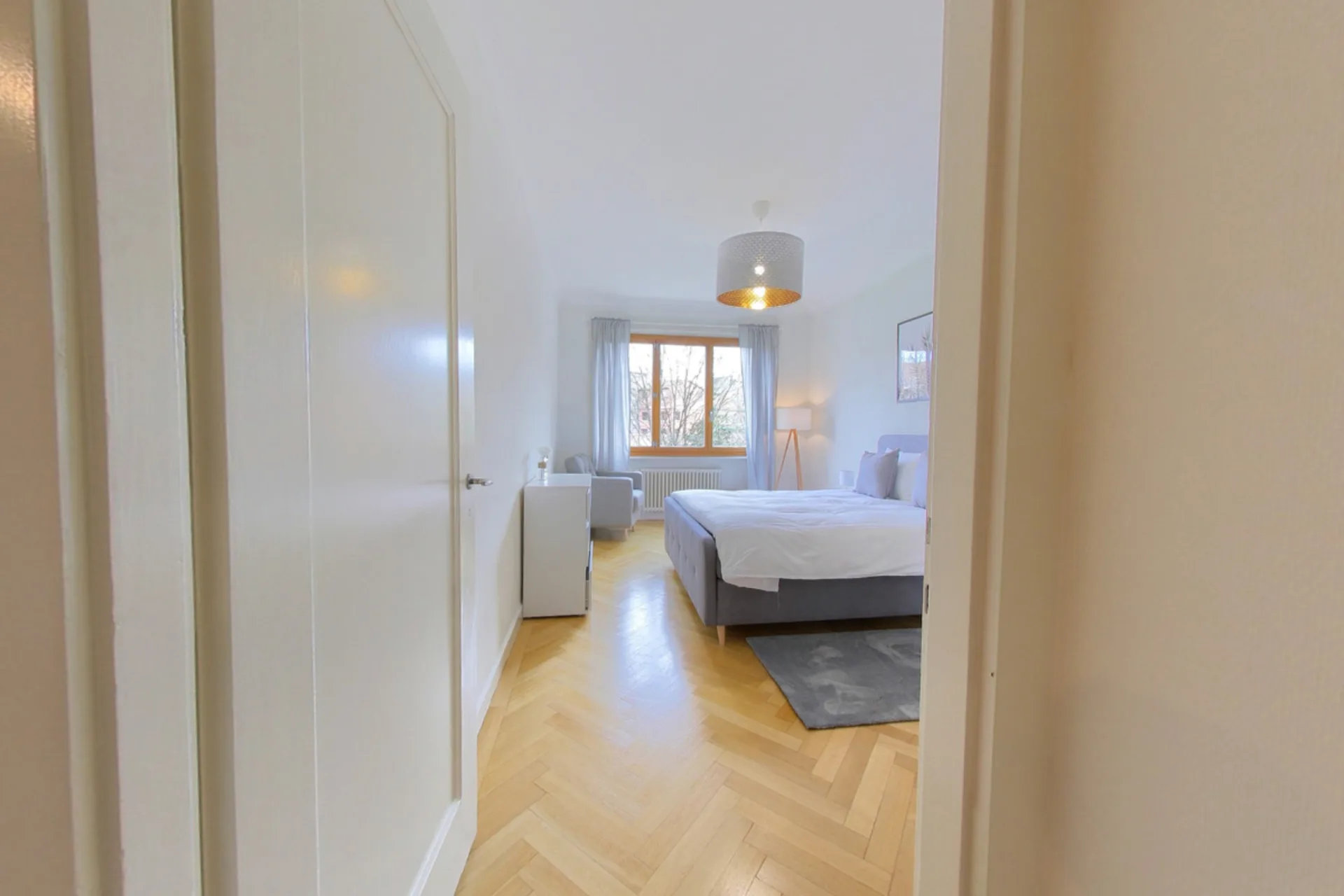
When an employee spends one, three or six months in a new city, their accommodation becomes more than a place to sleep. It is where they work, unwind, prepare meals and establish a daily routine.
For a mid-term corporate stay, the right accommodation should provide the comfort and independence needed for everyday life. A central, well-connected location makes commuting easier, while separate living and working spaces, a fully equipped kitchen and reliable high-speed Wi-Fi help employees maintain their usual routines. Privacy, quiet and responsive property management support also make it easier to settle in and focus on the assignment.
This combination of space, comfort and flexibility is what makes furnished serviced apartments particularly well suited to medium-term corporate accommodation, offering employees a private living environment while giving companies the flexibility required for temporary assignments.
Employee wellbeing: settling in quickly matters
Starting an international assignment means adapting to a new role, city and daily routine at the same time. Reducing unnecessary friction during this transition is an important part of the employee relocation experience. Accommodation can play a meaningful role in helping employees settle in faster, establish a routine, reduce everyday stress and maintain a healthier work-life balance.
KPMG’s 2025 research indicates that 82% of organisations are consistently acting on employee insights to enhance attraction, experience and retention, highlighting the growing importance of employee experience within Global Mobility strategy.
When employees feel comfortable and supported where they live, they can focus their energy where it matters: on their work, their wellbeing and the success of the assignment.

Professional Support: What happens when something goes wrong?
However well an apartment is prepared, maintenance issues and operational friction can still arise during a stay: a heating system needs adjusting in winter, an appliance malfunctions, or the internet connection drops right before a project deadline.
An employee on a high-stakes project shouldn’t have to spend their evening troubleshooting property maintenance or negotiating repairs with private landlords.
Having an experienced on-the-ground operations team changes the entire experience:
- For the employee: direct access to an in-house support team that resolves maintenance requests quickly, protecting their time, focus, and peace of mind.
- For HR and Mobility managers: complete reassurance that accommodation issues are handled locally and resolved on the ground, without escalating to their desks.
Attentive, on-the-ground support provides a reliable safety net, protecting employee comfort and company focus from start to finish.

Flexibility matters when assignments change
International assignments rarely follow the plan exactly as written. A three-month project can stretch to four. Someone may need to leave earlier than expected, or a project transitions to a new colleague on short notice.
Traditional residential leases simply don’t fit this reality; they bind companies to rigid 12-month commitments and costly exit terms.
This is where modern Corporate Apartment Management (CAM) differs from traditional leasing:
Professional corporate housing providers offer genuine booking flexibility in how they work, rather than treating every stay as fixed from day one.
– Easy booking extensions without administrative roadblocks or punitive rebooking charges
– The ability to transfer an apartment booking between colleagues when project roles rotate
– Transparent cancellation policies tailored to enterprise needs.
Partnering with an experienced housing provider means that when project scope shifts, assignee schedules and corporate budgets adapt smoothly.
At Cityus, this is a dynamic we see every day through our work with Mobility partners. That’s why our dedicated Booking Team is set up to adapt – helping you adjust arrival windows, manage stay extensions, and also organise alternative accommodation where needed.

Moving beyond cost: looking at the total value of an assignment
Mobility and procurement teams are, understandably, under constant pressure to manage travel and relocation costs. However, the cheapest accommodation isn’t automatically the one that delivers the best outcome. Cost has to be weighed against employee experience, productivity, flexibility, operational efficiency, and, ultimately, assignment success. And most of the time, these initial cheapest unvetted apartments lead to poor connectivity, surprise utility invoices, assignee dissatisfaction, and early assignment terminations.
Global Mobility priorities are shifting from basic cost reduction to overall assignment ROI. KPMG’s benchmarking survey highlights this shift: cost was cited as a top Global Mobility priority by 39% of organizations in 2024, falling to 18% in recent findings as mobility leaders turn their focus to value, duty of care, and overall assignment ROI.
| Evaluation Factor | Low-Cost Unvetted Rentals | Professional Corporate Housing |
| Pricing Transparency | Fragmented; unpredictable utility bills and surprise fees | Single all-inclusive monthly invoicing |
| Productivity Readiness | Inconsistent Wi-Fi; dining-table work setups | Enterprise-grade Wi-Fi and dedicated desks |
| Maintenance & Support | Assignee coordinates repairs with private landlords | Dedicated in-house team and discreet customer care |
| Contract Agility | Strict 12-month minimum stay and cancellation fees with costly exit penalties. | Flexible booking extensions matching project scopes |
| Duty of Care & Compliance | Inconsistent safety standards and unclear registration | Vetted properties with audited safety and legal compliance |
Investing in professionally managed accommodation safeguards both employee wellbeing and corporate project outcomes.

What does this mean for temporary accommodation in Europe?
Global mobility trends and corporate housing in Europe are actively reshaping the extended-stay market. As companies shift toward mid-length projects, the demand for flexible, high-quality serviced living continues to accelerate.
Key data points across the EMEA corporate accommodation market include:
- Longer project stays: SilverDoor reported an average serviced apartment booking duration of 58 nights across EMEA (November 2024 – January 2025), reflecting clear demand for mid-term assignment housing.
- Steady sector growth: HVS reported that European serviced apartment occupancy grew 3.8% between 2023 and 2024, powered by recovering corporate travel.
- Consistent high demand: HVS’s 2026 European report, assessing roughly 13,000 units across primary business capitals, recorded high average occupancy of approximately 80% through 2025.
Corporate mobility is moving decisively toward mid-length deployments. In response, temporary accommodation for employees in Europe is maturing, with specialised Corporate Apartment Management (CAM) models expanding to deliver the institutional standards, reliability, and ease these programs require.
How Cityus supports modern employee mobility
At Cityus, we provide professionally managed, furnished corporate apartments built specifically for medium-term stays, project deployments, and corporate relocations across Europe. With a standard one-month minimum stay, most of our bookings range between one and nine months – the sweet spot where modern business projects happen.
Operating across prime business hubs in Switzerland, France, and Luxembourg, Cityus delivers end-to-end Corporate Apartment Management (CAM) that bridges the gap between global corporate requirements and local real estate. We work closely with relocation agencies and DSPs, aligning corporate requirements with premium residential living:
- Built for mid-term stays: flexible terms tailored for one to nine months, without locking you into rigid long-term contracts.
- All stay information in one place: new guest web app bringing together everything needed for a smooth arrival and stay, including check-in instructions, apartment information, practical details, inventories, floor plans, local guidance and direct access to support.
- Simplified, all-in-one billing: centralised invoicing provides corporate clients and mobility partners with one clear solution for managing accommodation costs, reducing administration and making billing easier to track.
- Dedicated dual-team structure: corporate clients work directly with dedicated booking specialists alongside a local operations team on the ground, ensuring clear communication and immediate support.
- Attentive and discreet customer care: from hassle-free check-ins to swift maintenance, our multilingual in-house team and guest app resolve issues directly, around the clock.
- Built-in contract agility: we work closely with HR managers, Relocation Management Companies (RMCs), and Destination Service Providers (DSPs) to adjust dates, extend stays, and adapt to shifting project timelines without the administrative hassle.
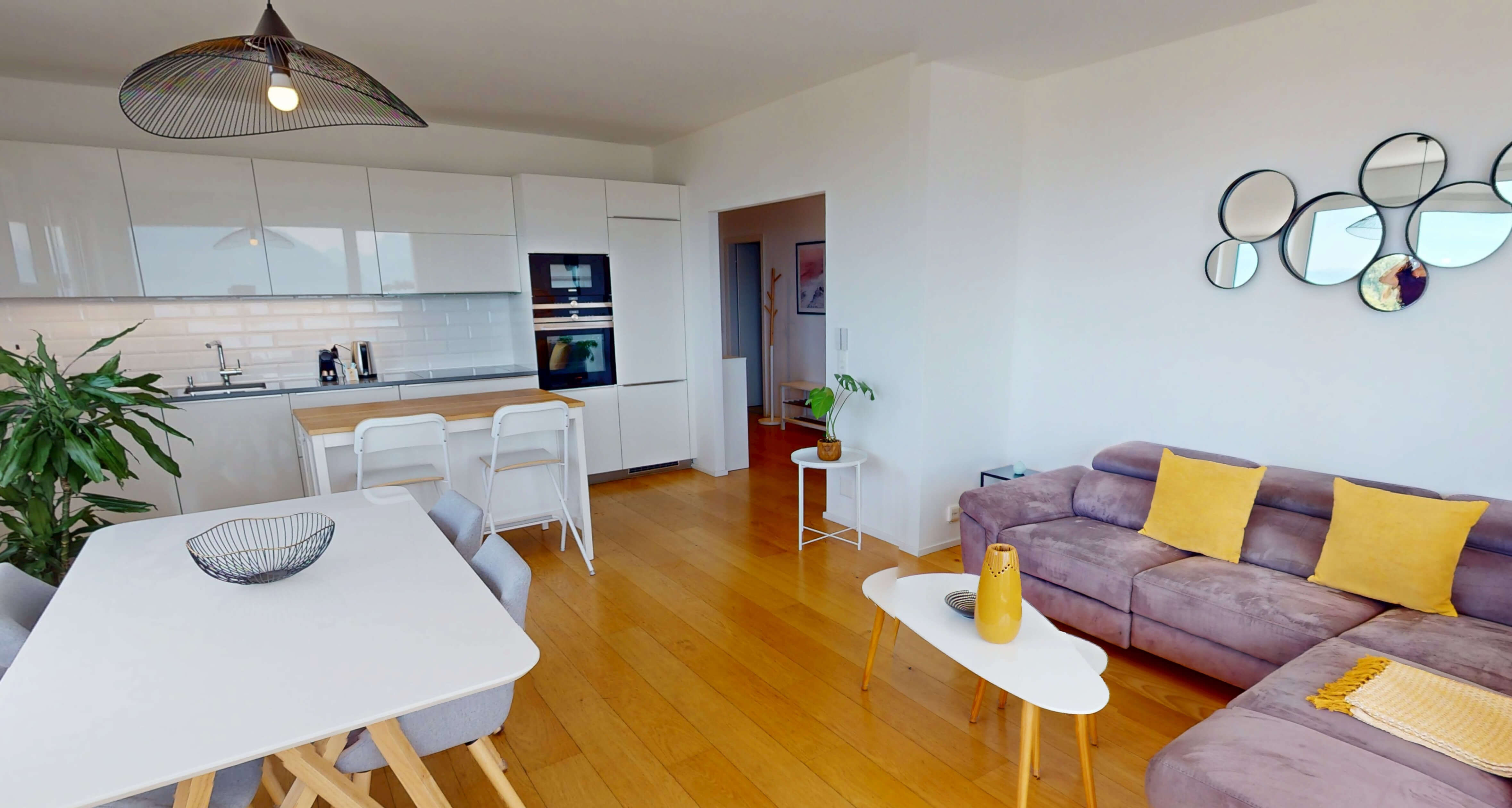
- Walk-in readiness: every apartment is furnished with a fully equipped kitchen, separate living and sleeping spaces, a dedicated workspace, and verified high-speed Wi-Fi.
Conclusion: Elevating mobility through professional housing partnerships
International assignments are now defined by agility, precision, and strategic talent placement. While shorter assignments give businesses the flexibility to seize market opportunities quickly, their ultimate success hinges on how effectively assignees are supported on the ground. Providing a functional, comfortable living environment is not merely an operational detail, infact it directly influences assignee wellbeing, retention, and project ROI.
Through dedicated Corporate Apartment Management (CAM), Cityus provides the missing operational link for modern mobility programmes. By pairing design-led, fully serviced residences with responsive on-the-ground support and genuine booking flexibility for temporary accommodation for employees, we ensure mobile professionals settle in quickly, stay productive, and feel completely at home from day one.
Planning upcoming temporary work assignments or extended business stays across Europe?
Explore our Business Apartment Solutions or Contact our booking team to discuss your corporate housing requirements with our dedicated booking team.
Frequently Asked Questions (FAQs)
What is a short-term international assignment?
A short-term international assignment is a temporary placement abroad, where an employee moves abroad for work, typically lasting a few weeks to around a year, used to fill a specific skills gap, kickstart a project, or enter a new market without the heavy administrative burden or long-term commitment of a permanent relocation.
Why are short-term corporate assignments increasing across Europe?
Companies need agility. Short-term moves let teams respond quickly to business opportunities, deploy specialist skills, support expansion, and transfer knowledge to local teams, often at a lower cost and with greater flexibility than a long-term relocation.
What accommodation is most suitable for a temporary international assignment?
Furnished, professionally managed apartments and serviced apartments are well suited for medium-term assignments. They provide significantly more space than hotels, fully equipped kitchens for daily meals, dedicated work areas, high-speed Wi-Fi, privacy, and professional support if issues arise.
How can HR support employees during short-term assignments?
HR and Mobility teams can protect employee well-being by providing suitable temporary corporate housing and eliminating initial arrival friction. Providing turnkey temporary housing close to public transit, ensuring dedicated workspaces and high-speed Wi-Fi, and access to responsive on-the-ground support helps them build a healthy routine quickly and avoid burnout.
Why is temporary corporate housing important to assignment ROI?
Where an employee stays directly influences how they perform. When an assignee lands in a comfortable, well-located, and professionally supported home base, they avoid administrative fatigue and can focus entirely on project milestones from their first day.
What is Corporate Apartment Management (CAM) in Global Mobility?
Corporate Apartment Management (CAM) is an end-to-end operational model where a dedicated provider oversees fully furnished residential properties specifically for business assignees. Unlike unvetted private rentals, CAM combines verified corporate-grade amenities, consolidated billing, flexible contract extensions, and attentive on-the-ground customer care to support employee wellbeing and corporate duty of care.